

Last updated: October 25, 2026
Quick Answer
LinkedIn is no longer just a networking feed. It has become an AI-search discovery layer, meaning AI tools and LinkedIn’s own conversational search now pull answers directly from individual posts, profiles, newsletters, and articles [1][2]. B2B marketers in 2026 need to treat every piece of LinkedIn content as something an AI system might quote, not just something a human might scroll past. That means writing original posts from named experts, keeping a steady publishing schedule, and feeding genuine proof points instead of generic updates.
Key Takeaways
- LinkedIn has become one of the top professional domains cited inside AI-generated answers in 2026 [1][2].
- Most AI citations come from individual profiles and posts, not company pages or celebrity accounts [2][3].
- Posting consistency matters more than viral reach for showing up in AI answers [2].
- LinkedIn’s own search experience is now conversational and personalized, similar to a chat-based assistant [1][4].
- LinkedIn’s matching algorithm pushes content to relevant audiences beyond direct followers, using AI signals [1].
- Sales Navigator and LinkedIn’s AI tools now work as a combined discovery and activation system [5].
- Small and mid-size B2B companies can compete here because AI discovery rewards clarity and consistency, not follower count [2].
- LinkedIn ad strategy needs separate thinking from organic AI visibility, since ad copy is not typically pulled into AI answers [6].
What Does It Mean That LinkedIn Is Becoming an AI Search Discovery Layer
LinkedIn is becoming an AI-search discovery layer because large AI systems, including LinkedIn’s own search tools, now index and quote LinkedIn content as source material for answers, not just as social posts [1][3]. Tens of thousands of LinkedIn URLs show up inside AI-generated answers across search engines and AI assistants, which is a meaningful shift from LinkedIn simply being a place to post updates [2].
In practical terms, this means a well-written LinkedIn post or article can get cited inside an AI chat answer the same way a blog post or news article might. LinkedIn’s blog has published direct guidance calling this “AI search” and has laid out specific advice for marketers trying to show up inside it [1][2]. If you’ve spent years treating LinkedIn as a resume-and-networking tool, this is the point where that view needs updating.
How Will LinkedIn AI Search Change B2B Marketing in 2026
LinkedIn AI search changes B2B marketing by shifting the reward system away from reach and toward credibility signals like named authorship, consistency, and proof-based content [2][3]. Marketers who used to measure success by impressions now need to think about whether an AI system would trust their content enough to quote it.
Three practical shifts worth planning for:
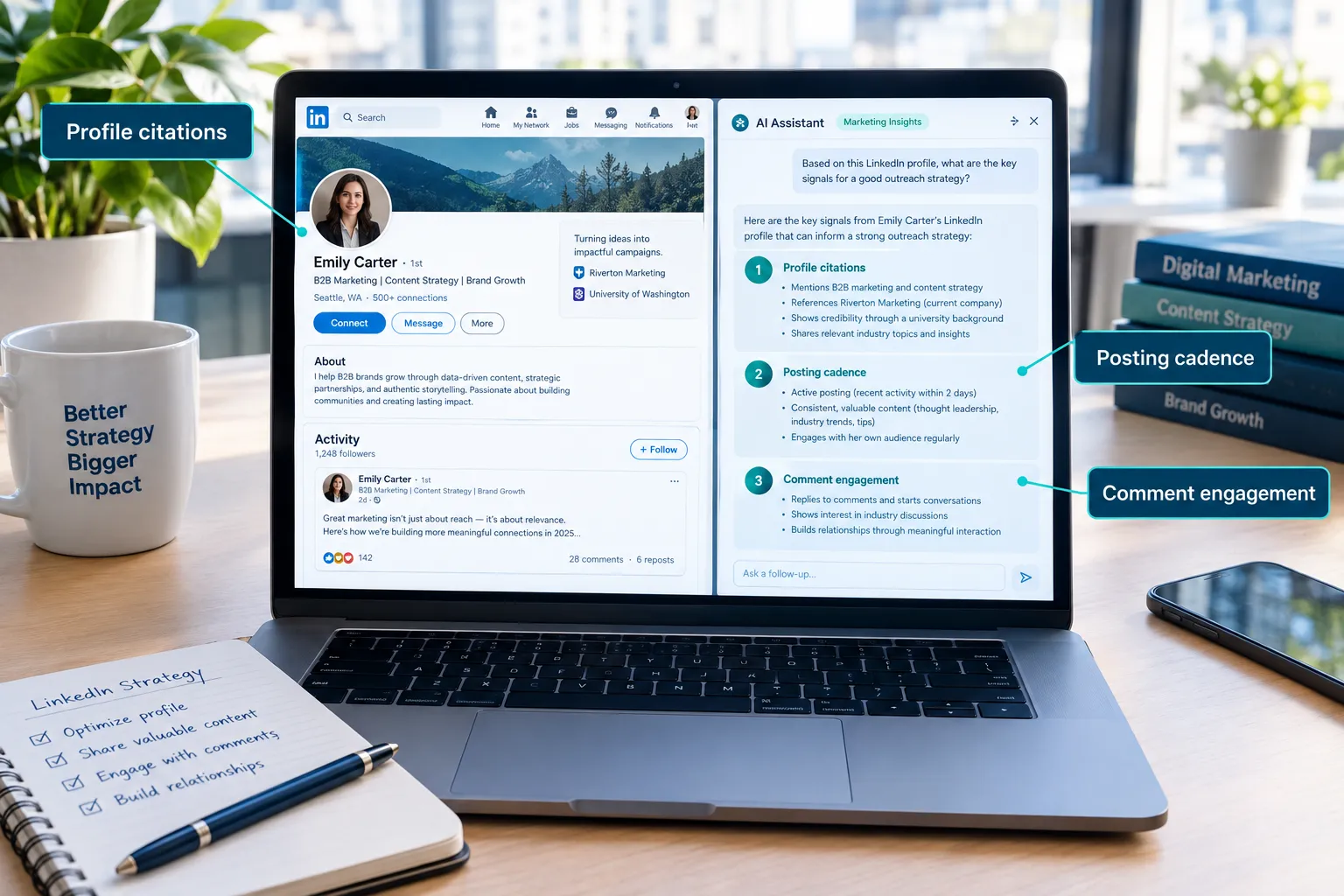
- Content needs a named human voice. AI systems favor profile-level content with a clear author over anonymous company posts [2].
- SEO, AI search, and LinkedIn strategy now overlap. Marketers are being advised to manage visibility across Google’s generative features and LinkedIn’s discovery layer together, not as separate workstreams [1]. If you’re already working on this for your website, read our guide on SEO vs GEO vs AEO in 2026 to see how the same logic applies.
- Sales and marketing tools are merging. LinkedIn’s Deep Sales and Sales Navigator features now connect directly to the same AI layer powering discovery, so lead generation and content visibility are no longer separate conversations [5].
What Content Strategy Works Best for LinkedIn AI Search Discovery
The content strategy that works best combines personal-profile publishing, steady cadence, and evidence-backed claims, because AI systems pull from sources that look credible and current [2][3]. A single viral post does less for AI visibility than a dozen consistent, well-reasoned ones.
A practical 2026 content mix looks like this:
| Content type | Best use for AI discovery | Posting frequency guide |
|---|---|---|
| Personal profile posts | Primary source for AI citations | 3-5 times per week |
| LinkedIn newsletters | Builds topical authority over time | Weekly or bi-weekly |
| Thought leadership articles | Longer-form proof and detail | 1-2 per month |
| Company page updates | Supports brand presence, lower citation rate | 2-3 times per week |
Choose personal-profile publishing first if you’re short on resources. It carries more weight in AI citations than company pages right now [2][3].
How Do You Optimize LinkedIn Posts for AI Search Results
You optimize LinkedIn posts for AI search by writing in clear, structured language, naming specific facts or numbers, and encouraging genuine discussion in the comments, since AI systems weigh both the post text and the engagement around it [2][3].
A simple formatting checklist:
- Open with a direct statement, not a question or teaser line.
- State one clear claim or lesson per post instead of mixing five ideas.
- Add a specific example, number, or named source to support the claim.
- Reply to comments with real detail, since engagement threads get pulled into context too.
- Repurpose strong posts into a newsletter or article for longer shelf life.
This mirrors the structured-answer approach used for AI Overviews on Google. If that’s new territory for you, our piece on Google AI Mode SEO and how to get cited in 2026 walks through the same answer-first writing habit.
Why Aren’t My LinkedIn Posts Showing Up in AI Search
Posts usually fail to show up in AI search because they are too generic, posted inconsistently, or published from a company page with no individual voice behind them [2][3]. AI systems need a recognizable source, and vague motivational posts rarely qualify as citable material.
Common reasons posts get skipped:
- No specific claim, number, or example in the text.
- Posted once and then abandoned for weeks, breaking the consistency signal.
- Written entirely from a brand account with no named author.
- Heavy on hashtags and emojis, light on actual information.
- Comments section is empty, so there’s no supporting context for AI to pull from.
Common mistake: treating LinkedIn posts like Twitter one-liners. AI discovery rewards substance over brevity.
What Are the Biggest Mistakes B2B Marketers Make With LinkedIn AI Discovery
The biggest mistake is assuming follower count or past virality still drives visibility, when AI citation patterns actually favor consistent, specific, and verifiable content from individual authors [2][3]. A second common mistake is ignoring LinkedIn articles and newsletters, both of which carry long-term topical weight.
Other frequent errors:
- Running the same message across company page and personal profile without adapting tone.
- Skipping LinkedIn’s native analytics on AI-driven reach, missing early signals of what’s working.
- Treating paid ads as a substitute for organic AI visibility, when they serve different purposes [6].
- Not linking LinkedIn content back to a company’s main website content, losing the chance to build topical depth. Internal content hubs matter here too, similar to how alt text helps both people and search engines understand page content.
Does LinkedIn AI Discovery Matter for Small B2B Companies
Yes, LinkedIn AI discovery matters for small B2B companies because citation patterns favor clear, consistent, individual-voice content over follower size or ad budget [2][3]. A founder or small sales team posting useful, specific content regularly can compete with larger brands in this layer.
This is good news for small business owners and freelancers who can’t match enterprise ad spend. The decision rule: choose personal-profile publishing if your team is small, since it’s cheaper and carries more AI citation weight than building out a large company page presence [2].
How Does LinkedIn AI Discovery Compare to Google Search
LinkedIn AI discovery and Google search both now surface AI-generated answers, but LinkedIn pulls primarily from its own platform content while Google draws from the open web including LinkedIn pages [1][3]. The two are connected rather than separate, since LinkedIn URLs frequently appear inside Google’s AI-generated answers too.
For marketers already tracking AI visibility on their website, the same principles apply. Check how this performs for your own domain using the Google Search Console AI performance report, and compare that against LinkedIn’s native analytics for a fuller picture.
What Platforms Compete With LinkedIn for B2B AI Discovery
No single platform fully replaces LinkedIn for B2B AI discovery, but company websites, industry publications, and review sites like G2 also feed into AI answers for business-related queries [3]. LinkedIn stands out because it combines professional identity, first-party data, and native AI search in one place [1][5].
The practical takeaway: don’t abandon your website or review-site presence. Treat LinkedIn as one strong layer among several, not a complete replacement for a content strategy built elsewhere.
Do LinkedIn Ads Need a Different Strategy for AI Discovery
Yes, LinkedIn ads need a separate strategy because paid content typically doesn’t get pulled into AI-generated answers the way organic posts and profile content do [6]. Ads still matter for direct response and lead generation, but they shouldn’t be relied on for AI visibility goals.
Recommended split:
- Use organic personal-profile and newsletter content to build AI citation presence.
- Use ads, including Sales Navigator-driven targeting, for direct lead capture and pipeline goals [5][6].
- Test AI-aligned messaging in ad copy anyway, since buyers researching through AI tools still respond to clear, specific claims.
When Will LinkedIn AI Search Discovery Be Fully Rolled Out
LinkedIn’s AI search and discovery features are already widely deployed in 2026, with conversational and personalized search live and company playbooks already published for marketers [1][4]. There isn’t a single future launch date to wait for; the shift has largely already happened, and the remaining changes will likely be incremental feature updates rather than a full relaunch.
That means waiting for a “finished version” before acting is a losing strategy. Marketers who start building consistent, author-led content now have a head start over those waiting for more certainty.
How Does LinkedIn AI Affect B2B Lead Generation and Sales
LinkedIn AI affects lead generation by connecting content visibility directly to sales tools, so a well-cited post or profile can now feed into Sales Navigator and Deep Sales targeting almost immediately [5]. This closes the gap between content marketing and sales prospecting more tightly than before.
In practice, sales teams using Sales Navigator benefit when marketing produces AI-visible content, since prospects researching a topic through AI tools may already know a company’s name before a sales rep ever reaches out.
What Industries Benefit Most From LinkedIn AI Search Discovery
Industries with complex buying decisions and long research cycles, like B2B software, professional services, finance, and enterprise technology, benefit most from LinkedIn AI search discovery because buyers in these fields already research heavily before contacting a vendor [2][3]. Industries with short, impulse-driven purchases see less benefit here.
If your business sells high-consideration products or services, this is where to prioritize effort first.
Do I Need to Completely Change My LinkedIn Strategy for 2026
No, a complete overhaul isn’t usually necessary, but most B2B marketers do need to adjust priorities: more named-author posting, steadier cadence, and better use of newsletters and articles alongside existing company page activity [2][3]. The underlying goal of good B2B marketing on LinkedIn hasn’t changed; what’s changed is how visibility is measured and rewarded.
Quick checklist for 2026:
- Shift primary publishing weight to personal profiles.
- Commit to a realistic, sustainable posting cadence.
- Add specific proof points to every post.
- Pair LinkedIn content with website and review-site presence.
- Separate organic AI-visibility goals from paid ad goals.
Conclusion
LinkedIn’s shift into an AI-search discovery layer isn’t a minor feature update. It changes how B2B marketers should plan content, measure success, and split time between organic posting and paid campaigns in 2026 [1][2]. The practical path forward is straightforward even if it takes discipline: publish consistently from real people, back up claims with specifics, and treat LinkedIn articles and newsletters as long-term assets instead of one-off content.
Start small if needed. Pick one person on your team to post three times a week with genuine insight, track what gets engagement and citations, and expand from there. This kind of steady, evidence-led approach tends to outperform occasional viral attempts, and it fits naturally with the kind of SEO made simple, step-by-step thinking that works across AI search platforms in general.
FAQ
Is LinkedIn replacing Google for B2B search? No. LinkedIn is becoming an additional AI-search source, especially for professional and company-related queries, but Google and other AI engines still handle broader search intent [1][3].
Do I need a LinkedIn newsletter to show up in AI search? Not strictly required, but newsletters help build sustained topical authority that supports AI citation over time [2].
Does company size affect LinkedIn AI visibility? Not directly. Citation patterns favor consistent, specific, individual-voice content over company size or follower count [2][3].
Should I stop using LinkedIn ads? No. Ads still drive direct leads and should continue, but they shouldn’t be your main tool for organic AI visibility [6].
How often should I post for AI discovery to notice? A steady cadence of three to five posts per week from a named individual tends to perform better than occasional high-effort posts [2].
Can small businesses compete with large brands here? Yes. AI citation patterns reward clarity and consistency, which smaller, focused teams can often deliver more easily than large organizations [2].
References
- AI Search. linkedin.com.
- How B2B Marketers Can Dominate AI Search on Linkedin 2026. linkedin.com.
- Powering AI Visibility with Linkedin. business.linkedin.com.
- New Linkedin Features and Updates. socialpilot.co.
- Deep Sales. business.linkedin.com.
- Linkedin Ads AI. sprites.ai.